Due to the Good Friday holiday, our print vendor will be closed on Friday, April 3. Orders received after 2:00 PM CST on Thursday, April 2 will be released into print production at 7:00 AM CST on Monday, April 6.
بسبب عطلة الجمعة العظيمة، سيكون مورد الطباعة لدينا مغلقًا يوم الجمعة، 3 أبريل.
سيتم إدخال الطلبات المستلمة بعد الساعة 2:00 مساءً بتوقيت CST يوم الخميس، 2 أبريل، إلى إنتاج الطباعة في الساعة 7:00 صباحًا بتوقيت CST يوم الاثنين، 6 أبريل.
Z důvodu svátku Velkého pátku bude náš tiskový dodavatel v pátek 3. dubna uzavřen.
Objednávky přijaté po 14:00 CST ve čtvrtek 2. dubna budou uvolněny do tiskové výroby v 7:00 CST v pondělí 6. dubna.
Aufgrund des Karfreitags bleibt unser Druckdienstleister am Freitag, den 3. April, geschlossen.
Bestellungen, die nach 14:00 Uhr CST am Donnerstag, den 2. April, eingehen, werden am Montag, den 6. April, um 7:00 Uhr CST in die Druckproduktion freigegeben.
Debido al feriado de Viernes Santo, nuestro proveedor de impresión estará cerrado el viernes 3 de abril.
Los pedidos recibidos después de las 2:00 p. m. CST del jueves 2 de abril se liberarán a producción de impresión a las 7:00 a. m. CST del lunes 6 de abril.
En raison du jour férié du Vendredi saint, notre fournisseur d’impression sera fermé le vendredi 3 avril.
Les commandes reçues après 14 h CST le jeudi 2 avril seront lancées en production d’impression à 7 h CST le lundi 6 avril.
En raison du congé du Vendredi saint, notre fournisseur d’impression sera fermé le vendredi 3 avril.
Les commandes reçues après 14 h (HNC) le jeudi 2 avril seront envoyées en production d’impression à 7 h (HNC) le lundi 6 avril.
Karena libur Good Friday, vendor percetakan kami akan tutup pada hari Jumat, 3 April.
Pesanan yang diterima setelah pukul 14.00 CST pada hari Kamis, 2 April, akan dirilis ke produksi cetak pada pukul 07.00 CST pada hari Senin, 6 April.
A causa della festività del Venerdì Santo, il nostro fornitore di stampa sarà chiuso venerdì 3 aprile.
Gli ordini ricevuti dopo le 14:00 CST di giovedì 2 aprile verranno avviati alla produzione di stampa alle 7:00 CST di lunedì 6 aprile.
4월 2일 목요일 오후 2시(CST) 이후에 접수된 주문은 4월 6일 월요일 오전 7시(CST)에 인쇄 제작으로 진행됩니다.
På grunn av høytiden Langfredag vil vår trykkerileverandør være stengt fredag 3. april.
Bestillinger mottatt etter kl. 14.00 CST torsdag 2. april vil bli sendt til trykkproduksjon kl. 07.00 CST mandag 6. april.
Vanwege de feestdag Goede Vrijdag zal onze drukkerij op vrijdag 3 april gesloten zijn.
Bestellingen die na 14:00 uur CST op donderdag 2 april worden ontvangen, worden op maandag 6 april om 7:00 uur CST vrijgegeven voor drukproductie.
Devido ao feriado da Sexta-feira Santa, nosso fornecedor de impressão estará fechado na sexta-feira, 3 de abril.
Os pedidos recebidos após as 14h CST de quinta-feira, 2 de abril, serão liberados para produção de impressão às 7h CST de segunda-feira, 6 de abril.
В связи с праздником Страстной пятницы наш поставщик печати будет закрыт в пятницу, 3 апреля.
Заказы, полученные после 14:00 по времени CST в четверг, 2 апреля, будут переданы в печатное производство в 7:00 по времени CST в понедельник, 6 апреля.
På grund av helgdagen Långfredagen kommer vår tryckleverantör att vara stängd fredag den 3 april.
Beställningar som tas emot efter kl. 14.00 CST torsdagen den 2 april släpps till tryckproduktion kl. 07.00 CST måndagen den 6 april.
Cat® Equipment Maintenance: How to Check Filters and Fluids on Cat® Equipment
Estimated read time: 3 minutes
By Cat Publications
Published Jan 14, 2026
Why Daily Inspections Matter
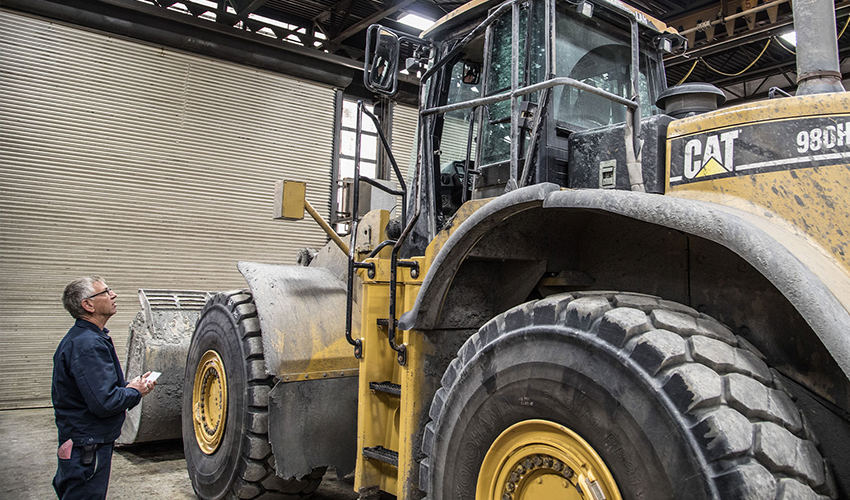
A quick walkaround before operating your Cat® machine is one of the simplest ways to keep it performing at its best. Paying attention to filters and fluid levels during these checks helps prevent unexpected downtime and can extend the life of your equipment—saving you time and money.
Start with a Visual Check
Begin your inspection from a distance. Look for anything unusual—like fluid spots on the ground. Then move closer and check the undercarriage for leaks, excess debris, and confirm that seals and bolts on the final drives are tight. If your machine uses rollers, make sure oil levels are correct.
Air Filter Checks
Air filters protect both your engine and your health. Here’s what to include in your daily routine:
Cabin Filters: These keep harmful particles out of the cab. The recirculating filter is inside the cab, while the fresh air filter is mounted on the machine’s exterior. Replace them when dirty.
Engine Air Filters: Watch the engine life indicator. It may be electronic (alerts appear on your cab display) or mechanical (located near the filter).
Dust Valve: Ensure the valve under the air filter housing is flexible and opens properly to release debris.
Important: Never clean air filters—always replace them. Cleaning can damage the filter media and allow contaminants into the engine.
Fluids and Leak Points
Inspect batteries for corrosion or leaks.
Refill windshield washer fluid if needed.
Confirm all fluid caps and S•O•SSM analysis ports are secure.
Check oil levels for engine, hydraulic system, transmission, final drives, swing drive, and differentials.
Look for leaks or blockages in coolers and fins; verify coolant levels.
Examine wheel motors and hydraulic components for leaks.
Inspect hoses, fittings, and connections thoroughly.
Drain the fuel-water separator and check for leaks around filters and lines.
For detailed instructions and safety guidelines, always refer to your Operation and Maintenance manual or contact your local Cat dealer.
To locate the correct Operation and Maintenance manual for your machine, utilize our Guided Search.

Use Caterpillar account